








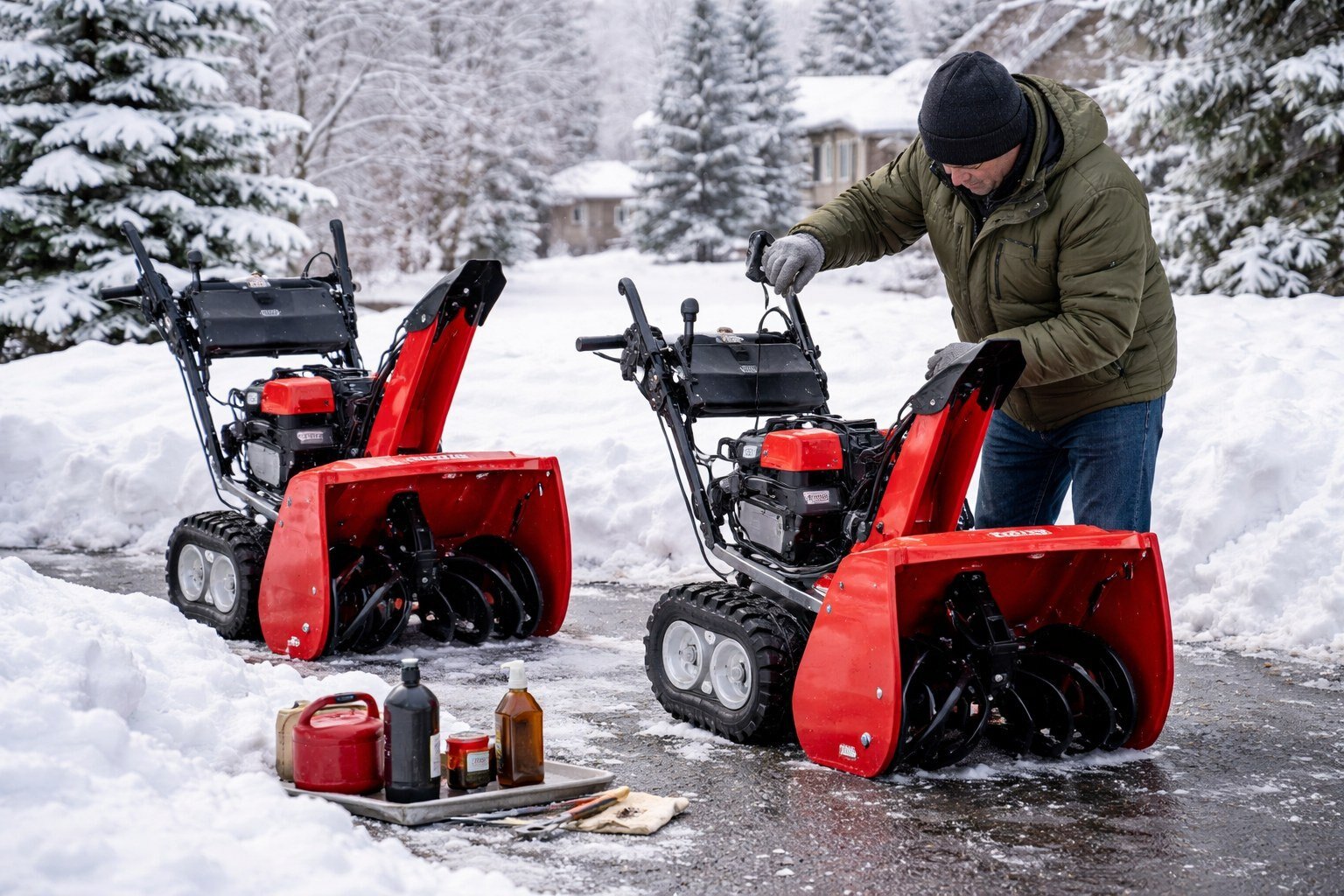


How to Prepare Your Honda Snowblower for Winter
Early October is a good time to prepare a Honda snowblower for Toronto’s upcoming winter. Completing basic checks before the first major snowfall gives you time to address maintenance needs and become familiar with the controls without a storm approaching.
A careful preseason routine should cover inspection, fuel, fluids, wear items, operation and safe storage. The owner’s manual for your specific Honda snowblower remains the best source for model-specific procedures, approved products and maintenance intervals.
Start With a Thorough Inspection
Move the snowblower to a level, well-ventilated work area and make sure the engine is off and cool. Disconnect the spark plug cap before working near the auger, impeller or other moving parts, following the safety directions in the owner’s manual. Good lighting will make it easier to spot loose hardware, damaged components and signs of fluid leakage.
Inspect the housing, handles, control cables, chute and deflector for visible wear or damage. Check that accessible fasteners are secure, but do not overtighten them or make adjustments outside the procedures provided for your model. Examine the scraper bar, skid shoes and other ground-contact components because worn parts can affect clearing performance and may allow the housing to contact the surface.
Look inside the auger area only after taking the appropriate shutdown and disconnection precautions. Remove any debris left from the previous season, and never use your hands to clear a blockage. If the auger, impeller or drive system shows damage, unusual movement or heavy corrosion, arrange an inspection before operating the machine.
Check Fuel and Engine Fluids
Fuel condition is an important part of reliable winter starting. Gasoline that has been stored for an extended period can deteriorate and contribute to starting or running problems, so follow Honda’s recommendations for fuel type, storage and stabilizer use. If old fuel remains in the snowblower, consult the owner’s manual or a qualified service department for the correct way to handle it.
Check the engine oil on level ground according to the procedure for your model. If an oil change is due, use the oil type and fill quantity specified in the manual, and avoid overfilling. Inspect around the engine for leaks and make sure all caps and drain points are secure before starting.
Some maintenance requirements vary by model and operating history. Review the service schedule for items such as the spark plug, fuel system and any other listed inspection points. If the snowblower was difficult to start last winter or ran unevenly, preseason service is preferable to troubleshooting it during a Toronto snowstorm.
Inspect Controls and Wear Items
Operate each lever and control with the engine off to confirm that it moves smoothly and returns as intended. Check the chute rotation and deflector movement, along with the auger and drive controls. Cables that bind, appear frayed or do not engage correctly should be adjusted or replaced using the model-specific service guidance.
Inspect belts only where the owner’s manual permits access, and look for cracking, fraying or other obvious deterioration. Shear bolts or pins should also be checked against the requirements for the specific snowblower. Use only the correct replacement parts, since ordinary hardware may not provide the intended protection if the auger strikes an object.
If your model has electric start or a battery-equipped feature, follow the manual’s preseason inspection and charging directions. Check accessible electrical connections for corrosion or looseness without bypassing any safety system. Confirm that lights and other fitted equipment work properly before winter use.
Test Operation Before Snowfall
Once the inspection and required maintenance are complete, move the machine outdoors to a clear, open area away from people, pets and vehicles. Start it according to the instructions for your Honda model and allow it to run while you listen for unusual noises. Exhaust contains carbon monoxide, so the engine should never be operated in a garage, shed or other enclosed space.
Test the drive, auger engagement, chute controls and safety-related control functions in a controlled setting. The snowblower should respond predictably, and moving parts should stop as described in the owner’s manual when controls are released. Shut the machine down immediately if you notice vibration, smoke, leaking fluid, inconsistent engine speed or difficulty engaging or disengaging a system.
A dry-weather test also provides an opportunity to review the starting and shutdown sequence. Make sure every household member who may operate the snowblower understands the controls, safe footwear requirements and the need to keep hands and feet away from moving parts. Never disable guards, interlocks or other safety features.
Prepare Storage and Winter Supplies
Choose a dry, secure and ventilated storage location with a clear route to the driveway or walkway. Keep the snowblower away from ignition sources and store fuel only in approved containers, following local safety requirements. Position the machine so it can be moved outside for starting without running the engine indoors.
Gather the items you may need during the season, including the correct replacement wear parts, approved lubricants and suitable tools. Keep the operator’s manual accessible, and have a proper clean-out tool available for blockages. Before each use, check the area for newspapers, extension cords, stones and other objects that could enter the auger.
Preseason preparation reduces the chance of discovering a problem when snow is already accumulating. If a repair, adjustment or scheduled service is beyond the procedures in the manual, Snow City Cycle Marine can help Toronto owners assess what their Honda snowblower needs before winter settles in.