








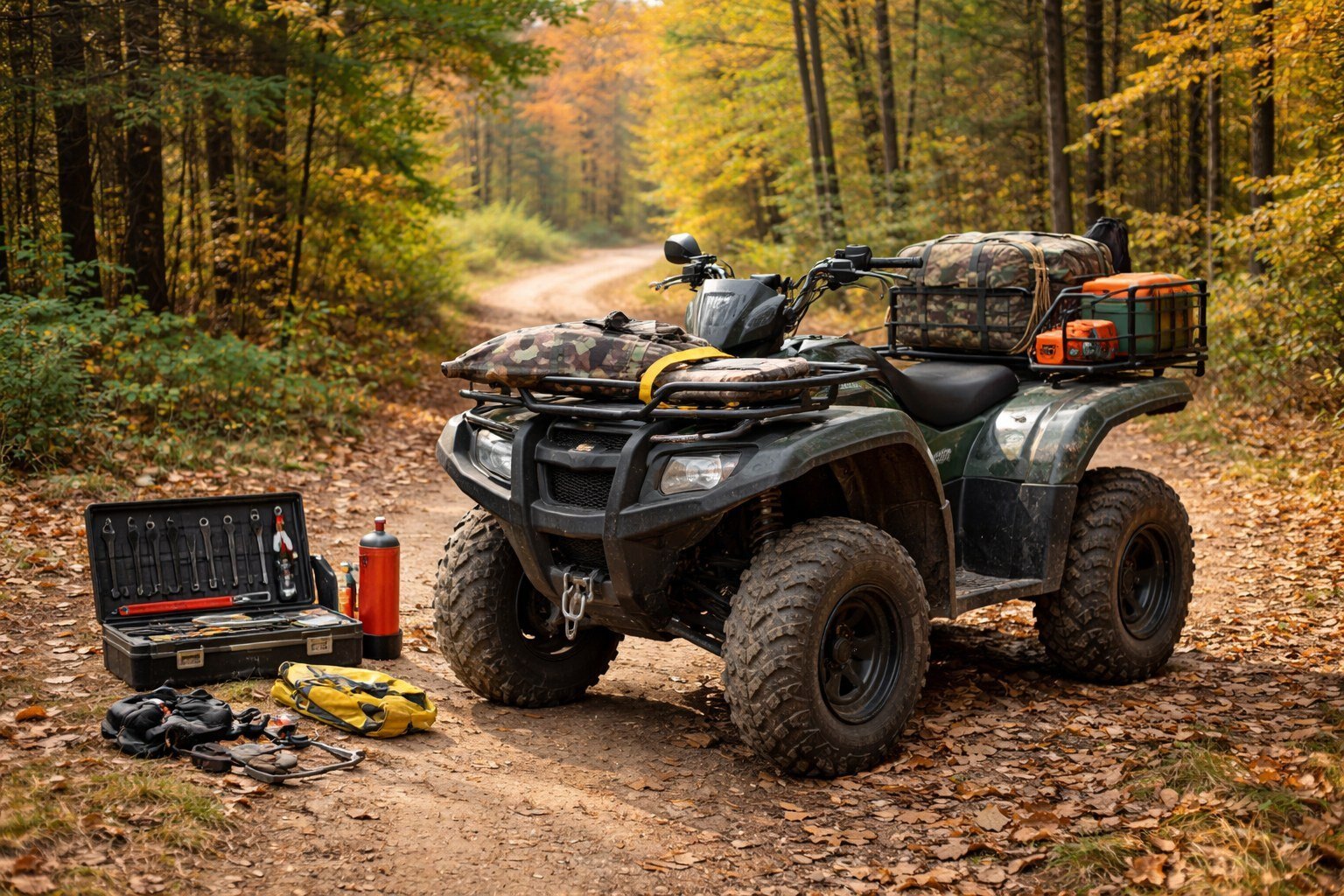


Essential ATV Preparation for Ontario Hunting Season
October brings cooler mornings, changing trail conditions and the start of many fall hunting plans across Ontario. Before carrying equipment into the field, an ATV should receive a careful inspection that reflects the added demands of rough terrain, heavier cargo and remote travel.
Good preparation goes beyond checking whether the engine starts. Maintenance, load management, recovery equipment and an understanding of current access rules can all contribute to a safer, more dependable hunting trip.
Complete Essential ATV Maintenance
Begin with the maintenance schedule in the ATV owner’s manual, especially if the machine has been stored or used heavily through summer. Check the engine oil and other applicable fluids, looking for unusual colour, low levels or signs of leakage. Inspect the air filter as well, since dust and debris can restrict airflow and affect performance when the ATV is working under load.
Examine the battery terminals for looseness or corrosion and confirm that the battery holds a reliable charge. Cooler fall temperatures can expose a weak battery, particularly after the ATV has been parked overnight. Test the headlights, brake light, switches and instrument display before leaving home, as hunting travel often begins or ends in limited daylight.
Look over visible hoses, cables, fasteners and protective panels for wear, damage or looseness. The drive system should also be inspected according to the manufacturer’s instructions, whether the ATV uses a belt, chain or another arrangement. If a noise, vibration or starting problem is already present, arrange an assessment before relying on the machine in a remote area.
Inspect Tires Brakes and Steering
Ontario’s fall conditions can change quickly from dry ground to mud, wet leaves, frost or early snow. Inspect every tire for cuts, punctures, embedded objects, weather cracking and uneven wear. Set tire pressure to the manufacturer’s recommendation rather than judging by appearance, because incorrect pressure can affect traction, handling and stability.
Check the brakes for normal response and inspect accessible components for wear or damage. Steering should move smoothly without unusual play, pulling or binding, while the suspension should show no obvious leaks or damaged parts. A short test ride in a controlled area can help reveal concerns before the ATV is loaded with hunting equipment.
Ground clearance and four-wheel-drive capability do not remove the risks created by hidden rocks, ruts, stumps and soft shoulders. Ride at a speed that leaves enough time to identify obstacles, especially when leaves cover the trail surface. If conditions become too steep, unstable or waterlogged, turning around may be the safest option.
Secure Cargo and Recovery Gear
Plan the load before attaching gun cases, bows, packs, tools or other equipment. Use racks, mounts and tie-down points intended for the ATV, and keep the load within the limits listed by the manufacturer. Weight should be balanced and secured so that it cannot shift into the controls, contact hot components or interfere with the rider’s movement.
Remember that any harvested game will add weight and may change the ATV’s centre of gravity. Do not exceed the machine’s carrying or towing limits, and account for the combined weight of the rider, accessories, cargo and trailer where applicable. A heavier ATV needs more room to stop and may respond differently on slopes, loose ground and side hills.
Carry recovery and emergency items suited to the route and weather, such as a basic tool kit, tire repair supplies, an approved fuel container when appropriate, first-aid materials and extra warm clothing. A winch or tow strap can be useful only when it is properly rated, securely attached and used with safe recovery practices. Keep essential items protected from moisture, and never rely on mobile service being available throughout the trip.
Confirm Access and Safety Requirements
Before departure, confirm that ATVs are permitted on every road, trail or property included in the route. Ontario requirements can vary with the type of land, road and municipality, while individual trail systems may require permission or permits. Review current provincial and local rules rather than assuming that previous access still applies.
Make sure registration, insurance, licensing and safety equipment meet the requirements that apply to the rider, machine and location. Wear an appropriate helmet and protective clothing, even for a short trip from camp. Firearms, bows and harvested game must also be carried and transported in accordance with current hunting, firearms and wildlife regulations.
Share the planned route and expected return time with someone who is not travelling with the group. Carry navigation tools, remain aware of fuel range and avoid travelling alone when practical. Alcohol, drugs, fatigue and distractions can impair judgement, so the ATV operator should remain alert and prepared for changing conditions.
Prepare for the Next Outing
After each trip, remove mud, leaves and plant material so that damage and leaks remain visible. Inspect the tires, underbody, racks and suspension for anything picked up on the trail, then allow wet components and gear to dry. Cleaning the ATV before moving between riding areas can also help reduce the spread of invasive plants and soil-borne material.
Refuel as appropriate, recharge the battery if needed and replace any emergency supplies used during the outing. Record new noises, warning lights or handling changes while they are still fresh in mind. Addressing small concerns between trips can prevent them from becoming larger problems deep into hunting season.
Preparation should always follow the instructions and limits for the specific ATV. The team at Snow City Cycle Marine in Toronto can help owners discuss maintenance needs, compatible accessories and questions related to getting a machine ready for fall use. Completing those checks before departure leaves more time to focus on the hunt and the conditions ahead.