








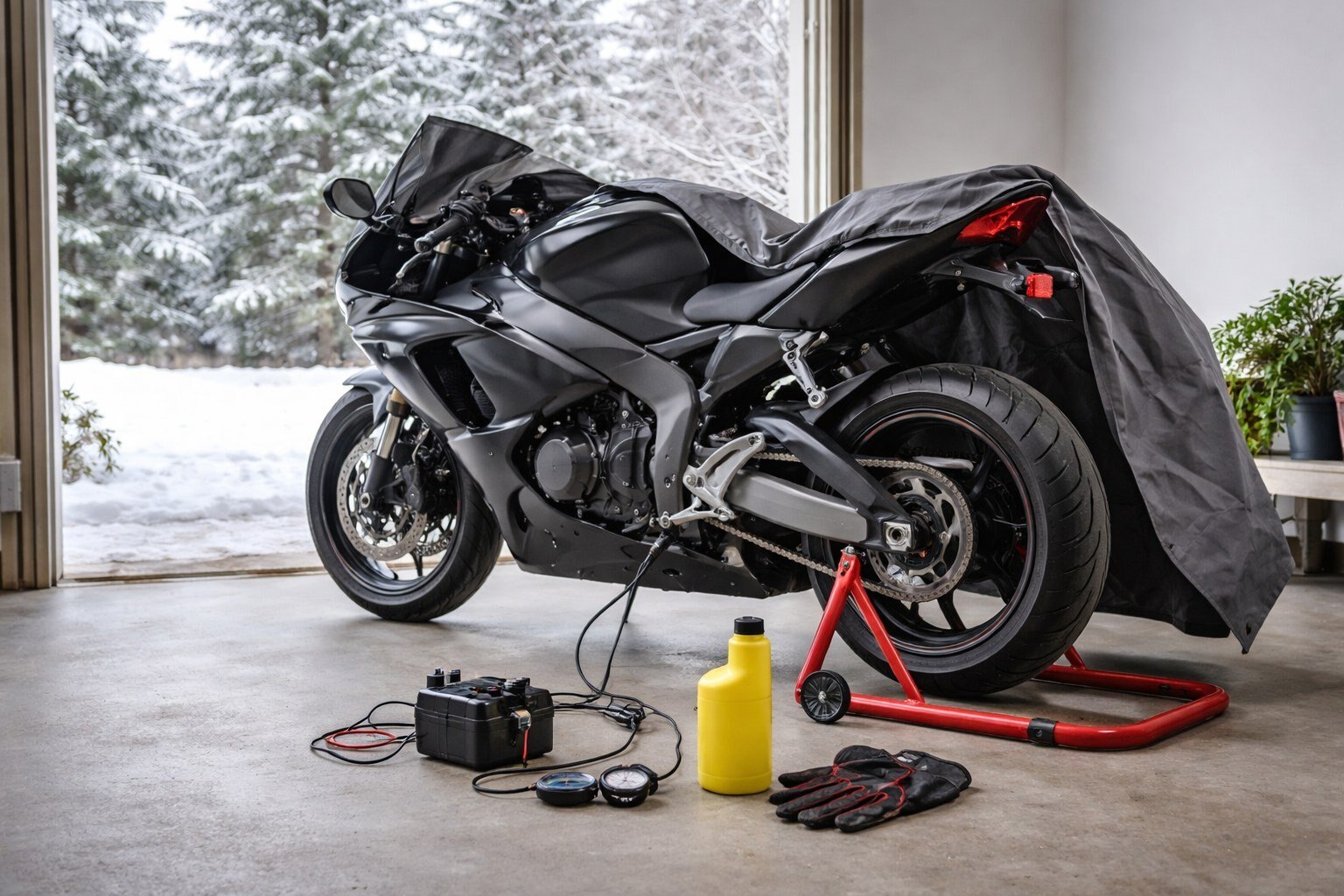


Motorcycle Winter Storage Best Practices for Ontario
By early October, Toronto riders should be thinking about how and where their motorcycles will spend the winter. Proper storage helps protect the fuel system, battery, tires, finish and internal components from months of cold temperatures, moisture and inactivity.
A careful routine also makes the first ride of spring easier and reduces the chance of discovering preventable problems after the snow melts. Because motorcycles and battery types vary, owners should pair these general practices with the instructions in their owner’s manual and model-specific advice from Snow City Cycle Marine.
Choose a Suitable Storage Space
A dry, secure and sheltered location is the best choice for winter storage. An indoor space helps limit exposure to snow, road salt, wind and repeated freeze-thaw cycles, but it should also have reasonable ventilation and be free from water leaks. Avoid placing the motorcycle where melting snow from a vehicle can collect underneath it.
Before parking, check the area for signs of rodents and remove nearby food, nesting materials or clutter that could attract them. Openings and wiring can appeal to pests, so inspect the motorcycle periodically through the winter without disturbing its storage setup. If the space is shared, leave enough room around the bike to prevent accidental bumps and allow safe access.
Use a breathable motorcycle cover rather than an airtight plastic sheet that can trap condensation against paint and metal. The cover should be clean, properly fitted and suitable for the storage environment. Make sure the exhaust and other hot components have cooled completely before covering the motorcycle.
Clean and Inspect the Motorcycle
Wash the motorcycle before storage to remove insects, grime, road residue and any early-season salt. Pay attention to areas where dirt can hold moisture, including around fasteners, under bodywork edges and near the wheels. Dry the motorcycle thoroughly, since hidden moisture can contribute to corrosion during a long Toronto winter.
Once the bike is clean, inspect it for fluid leaks, loose hardware, damaged cables, worn controls and other issues that may need attention. Finding these concerns in autumn provides time to plan service rather than facing delays when riding season returns. Follow the owner’s manual when lubricating the drive chain, control pivots, locks or other specified points.
A suitable protectant can help preserve painted, chrome and exposed metal surfaces, but products must be kept away from brake components, tire tread, seats and controls where slipperiness would be dangerous. Use only products intended for the relevant material. This is also a good time to note existing scratches or corrosion so their condition can be checked again in spring.
Prepare Fuel and Fluids
Fuel can degrade during an extended storage period and may leave deposits in the fuel system. Follow the motorcycle manufacturer’s storage procedure, which may call for fresh fuel and an appropriate stabilizer used at the correct ratio. After adding stabilizer, operate the motorcycle only as directed so treated fuel can move through the system.
Carbureted and fuel-injected motorcycles may require different preparation, so avoid applying one method to every bike. The correct approach can also depend on the fuel tank material and the expected storage duration. If the manual is unclear, Snow City Cycle Marine can help owners identify a suitable procedure for their motorcycle.
Check the engine oil, coolant, brake fluid and other service items listed for the model. Coolant must provide suitable freeze protection for Ontario temperatures, while old or contaminated fluids may be better addressed before storage. Do not open a hot cooling system, mix incompatible products or perform maintenance beyond your tools and experience.
Protect the Battery and Tires
A battery can gradually discharge while the motorcycle sits, especially when clocks, security systems or other electronics draw a small amount of power. Use a compatible smart maintainer if the battery manufacturer and motorcycle manual permit it, and follow all ventilation and connection instructions. Different battery chemistries require different charging equipment, so a charger should never be chosen by connector shape alone.
If the battery is removed, switch off the motorcycle and follow the specified disconnection sequence. Store it in an appropriate dry location away from ignition sources, extreme temperatures and areas accessible to children or pets. Inspect the case and terminals for damage or corrosion before charging or reinstalling it.
Inflate the tires to the manufacturer’s recommended cold pressures before storage and check them occasionally. Approved stands can reduce prolonged loading on the tires, but only when the motorcycle is stable and the lifting points are correct. If stands are not suitable, follow the manual’s guidance on repositioning the bike and never leave it where it can roll or tip.
Plan a Careful Spring Return
Winter storage is not complete until the motorcycle is safely prepared for the road again. Remove the cover and any pest-control materials, inspect for leaks or chewed wiring, and confirm that the battery is secure. Check tire condition and pressure, fluid levels, lights, controls, brakes, mirrors and drive components before starting or moving the bike.
Avoid occasional short starts during winter unless the manufacturer specifically recommends them. Brief running may not bring the motorcycle fully to operating temperature and can add moisture to the engine and exhaust. A proper spring startup, followed by the required checks and service, is generally more useful than repeatedly idling a stored bike.
Ontario roads can retain sand, salt residue, potholes and cold patches well into spring. Even after the motorcycle is mechanically ready, begin with a cautious ride and allow tires, brakes and the rider to settle back into the season. Any warning light, unusual sound, leak or change in handling should be investigated before regular riding resumes.